Millet prices in Hyderabad continue to fluctuate as local supply tightens and demand from food, feed, and brewing units rises. For Procurement Managers and Plant Heads, these shifts affect more than purchase budgets; they influence yield stability, extrusion behaviour, fermentation performance, and overall cost-in-use.
Hyderabad’s mills and formulation plants rely on consistent grain quality, yet variations in moisture, size, and impurities remain common in regional mandi supplies. This forces teams to make last-minute sourcing decisions, increasing downtime risk and batch inconsistency.
This report provides a clear view of today’s millet price environment in Hyderabad, along with the demand patterns and supply corridors shaping local pricing. It is built for industrial buyers who need predictable inputs, cleaner batches, and fewer sourcing disruptions.
Key Takeaways
Hyderabad demand remains high due to increased requirements from brewing, health-food, and animal feed manufacturers.
Price variability is driven by grain quality, especially moisture and impurity levels, which directly affect yield and extrusion/fermentation stability.
Supply into Hyderabad depends heavily on Telangana, Karnataka, and Maharashtra, each influencing price differently based on season and consistency.
Bulk buyers face the highest risk when relying on fragmented mandi sourcing, as quality shifts can disrupt batching and production schedules.
Understanding daily and weekly price movement helps procurement teams plan volumes, negotiate better, and avoid emergency purchases at inflated rates.
Hyderabad Millet Price Today
If you’re sourcing millets in Hyderabad, you already know prices aren’t one fixed number. Your final rate depends on the pack size, handling needs, and how the material fits into your production setup.
When you buy 10, 25, or 50 tons, the load can’t arrive as one bulk shipment. You need it packed in formats that support:
Easy stacking
Manual or automated dosing
Batch-wise issuance
Lower handling losses
Each of these choices affects your per-kg price. Smaller packs add packing and labour costs, while larger sacks are cheaper to handle but require compatible storage space.
Grain Trader India supplies bulk loads in any of these formats, so you get material that fits your workflow, and pricing that reflects exactly how you need the product packed and delivered. Here is a look at the millet prices today in Hyderabad.
Millet | 1 KG Price | 10 KG Price | 100 KG (Quintal) | 1000 KG (Ton) |
|---|---|---|---|---|
₹ 28.3 | ₹ 283.0 | ₹ 2830.0 | ₹ 28300.0 | |
₹ 28.7 | ₹ 287.0 | ₹ 2870.0 | ₹ 28700.0 | |
₹ 37.9 | ₹ 379.0 | ₹ 3790.0 | ₹ 37900.0 | |
₹ 22.9 | ₹ 229.0 | ₹ 2290.0 | ₹ 22900.0 | |
₹ 25.5 | ₹ 255.0 | ₹ 2550.0 | ₹ 25500.0 | |
₹ 22.2 | ₹ 222.0 | ₹ 2220.0 | ₹ 22200.0 | |
₹ 38.0 | ₹ 380.0 | ₹ 3800.0 | ₹ 38000.0 |
The Operational Impact: Functional Requirements vs. Quality Risk in Hyderabad's Processing Lines
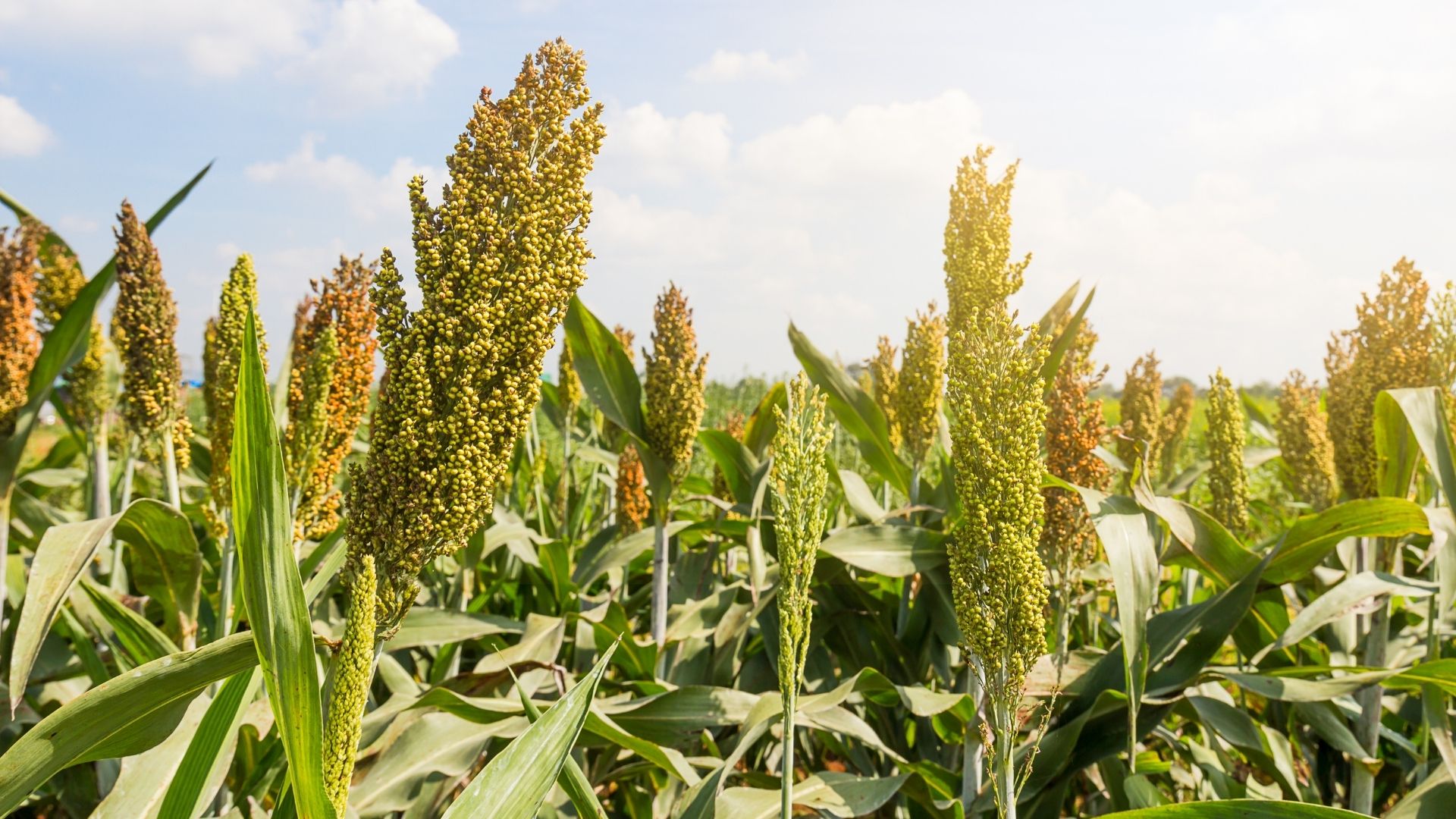
Hyderabad’s major processing industries depend on millets that behave predictably under heat, pressure, and fermentation. When moisture, grain size, or impurity levels shift, the impact shows up immediately in throughput, yield stability, and batch uniformity. Below is how each sector’s functional needs align with its biggest quality risks.
Brewing and Fermentation Units Using Sorghum and Finger Millet
Brewing lines require millets that support stable mash behaviour and predictable conversion efficiency.
Functional Requirement
Breweries depend on millets that provide:
Controlled mash viscosity that reduces mid-run corrections
Uniform grain size for consistent milling and mashing
Predictable starch density to maintain conversion efficiency
Low impurities that minimise filtration load
Operational Risk When Quality Is Inconsistent
Variations affect multiple stages of fermentation:
Grain size inconsistency forces adjustments in milling patterns
Impurities slow filtration and extend cycle time
Moisture imbalance alters mash behaviour and extraction consistency
Uneven starch density disrupts fermentation yield stability
High-quality lots of sorghum and finger millet face stronger competition during scheduled brewing cycles.
Nutritional and RTE Manufacturers Using Foxtail, Little, Proso, and Barnyard Millet
Snack, cereal, and instant food units require predictable flour and hydration behaviour across shifts.
Functional Requirement
These processors rely on millets that deliver:
Predictable water absorption for stable dough and batter viscosity
Uniform flour particle size for consistency in forming and shaping
Stable colour and density for visual and textural uniformity
Low impurities to minimise screening loss and milling downtime
Operational Risk When Quality Is Inconsistent
Quality variation affects both milling and downstream processing:
Moisture swings disrupt hydration ratios across batches
Inconsistent flour behaviour affects shaping, spreading, or puffing
Impurity spikes increase cleaning time and reduce usable yield
Grading variability alters flow behaviour during blending
Demand tightens for well-graded millets that meet strict internal QA thresholds.
Feed Formulation Units Using Sorghum and Pearl Millet
Feed mills need millets that support predictable grinding behaviour and pellet formation.
Functional Requirement
Feed formulators depend on millets that offer:
Consistent grindability for uniform particle size
Stable hardness to support pellet durability
Predictable nutrient behaviour to maintain formulation ratios
Reliable multi-ton availability for continuous feed cycles
Operational Risk When Quality Is Inconsistent
Variability directly impacts mill efficiency and pellet strength:
Hardness variation alters grinding load and throughput
Inconsistent particle size reduces pellet uniformity
Moisture fluctuation weakens the binding behaviour in pelletisation
Grading differences force adjustments during mixing and batching
Competition intensifies during peak poultry and livestock demand cycles.
What This Means for Procurement Teams in Hyderabad
Hyderabad’s food, feed, and brewing industries require millet lots that match their functional needs. Procurement teams should:
Review lots based on expected behaviour in the target process
Set clear thresholds for moisture, impurity, and grain size
Prepare for shorter availability windows during industry peaks
Diversify origins to reduce dependence on variable mandi lots
Aligning sourcing with functional requirements reduces production disruption and stabilises cost-in-use for Hyderabad facilities.
Regional Supply Corridors Affecting Hyderabad Millet Prices
The production patterns of neighbouring states shape Hyderabad’s millet supply. These corridors determine which millet types are readily available to industrial buyers and when bulk volumes typically move into the city. The points below focus on production geographies and their practical relevance for procurement, not on speculative price behaviour.
1. Telangana
Telangana cultivates several small millets, including foxtail millet and little millet, making it a proximate source for Hyderabad buyers.
As it sits within the same regional belt, material from Telangana often forms the first wave of arrivals into Hyderabad mandis during harvest periods. The availability of locally grown lots provides manufacturers with shorter-distance sourcing options, especially for mills requiring frequent replenishment.
2. Karnataka
Karnataka is one of India’s largest producers of finger millet (ragi) and also grows foxtail, proso, little, and barnyard millet at scale.
Due to this production depth, Karnataka is a reliable origin for industrial-scale volumes, especially for manufacturers that depend on consistent grain size and quality for flour milling, extrusion, or brewing processes. Hyderabad buyers routinely consider Karnataka-origin lots when sourcing ragi or small millets in larger batches because those crops are widely cultivated there.
3. Maharashtra
Maharashtra is a major producer of sorghum (jowar) and also contributes significantly to pearl millet (bajra) output.
These two crops make Maharashtra an important supply corridor for Hyderabad buyers, particularly feed mills and processors that require bulk sorghum or bajra during peak production cycles. When Maharashtra enters its post-harvest phase, higher-volume movement of these grains typically becomes available for interstate procurement.
Why These Corridors Matter for Hyderabad Manufacturers
The relevance of these supply origins for procurement teams is operational rather than speculative:
Each state specialises in different millet types, so availability by variety changes depending on the corridor.
Seasonality in these regions determines when bulk lots can be sourced for industrial use.
The proximity of Telangana, the production scale of Karnataka, and the sorghum/bajra strength of Maharashtra collectively define the range of sourcing options available to Hyderabad buyers at any given time.
These factors influence planning decisions for food, feed, pet food, and brewing companies that rely on predictable access to specific millet varieties.
Procurement Framework for Hyderabad Buyers Handling Speciality Millets
Speciality millets behave differently across brewing, extrusion, milling, and blending lines. To avoid variability in output, Hyderabad procurement teams evaluate millet lots against a structured set of criteria.
1. Match Millet Type to Its Functional Role in Your Process
Different millets perform differently in brewing, flour applications, feed blending, and extrusion. Procurement teams should align sourcing with the intended processing behaviour to reduce rework and maintain batch stability.
2. Define Acceptable Quality Thresholds Before Approval
Moisture, grain size, hardness, and impurity levels directly influence throughput and cost-in-use. Clear thresholds help QA and procurement teams prevent performance issues in grinding, extrusion, fermentation, or pellet formation.
3. Assess Batch Consistency Across Sourcing Cycles
Consistency over multiple lots is essential for continuous production. Procurement teams should evaluate a supplier’s ability to maintain stable grading, grain uniformity, and availability across seasons.
Grain Trader India supports this procurement approach through controlled sourcing, standardised cleaning and grading, and lot-wise testing aligned with national quality norms. Read in detail below.
Secure Stable Millet Inputs With Grain Trader India
You need millet inputs that perform predictably in their processing lines. Variations in quality or supply can disrupt batching, reduce throughput, and increase cost-in-use. The points below reflect what industrial buyers prioritise and how Grain Trader India fits into those requirements.
1. Consistent Quality that Supports Stable Processing
Plants need millet with controlled moisture, grain size, and impurity levels to avoid frequent recalibrations in extrusion, brewing, or pelletisation. Grain Trader India supports this by supplying cleaned, graded, and tested lots aligned with national standards.
2. Steady Volumes for Continuous Production
Procurement teams require reliable access to specific millet types across seasons. Grain Trader India’s domestic sourcing network helps ensure availability for Hyderabad buyers running multi-shift or continuous lines.
3. Packaging Formats Suited to Industrial Handling
Large orders like 10, 25, or 50 tons must arrive in pack sizes that fit warehouse systems and batch dispensing. Grain Trader India prepares bulk loads in 2 kg, 10 kg, 25 kg, or 50 kg packs, based on buyer requirements.
4. Delivery Timelines that Match Production Schedules
Delayed shipments can stall formulations or shift planning. Grain Trader India’s pan-India delivery capability allows Hyderabad plants to align procurement with operational timelines.
Conclusion
Hyderabad’s millet market is shaped by shifting industrial demand, regional supply patterns, and the quality variability that arrives through local mandis. For Procurement Managers and Plant Heads, these factors influence more than daily pricing; they determine throughput stability, extrusion performance, fermentation behaviour, and overall cost-in-use.
Clear visibility of millet prices, along with predictable quality and packaging suited for industrial handling, allows Hyderabad manufacturers to plan production cycles with fewer disruptions. Grain Trader India supports this requirement with consistent millet availability, controlled grading, and flexible packaging formats that integrate smoothly into existing plant workflows.
Buyers who rely on continuous operations can reduce sourcing risk by working with structured suppliers rather than fragmented market channels. Get in touch with our procurement team to get a tailored quote.
FAQs
1. What factors should Hyderabad manufacturers prioritise when approving a millet supplier?
Industrial buyers should focus on documented quality testing, batch consistency over multiple deliveries, and the supplier’s ability to meet specific packaging and volume requirements. This ensures predictable performance in milling, extrusion, fermentation, and blending.
2. How often should procurement teams review millet prices in Hyderabad?
Most manufacturers review prices on a weekly or bi-weekly cycle. This frequency aligns with typical production planning windows and helps avoid urgent spot-buying when market conditions shift.
3. Do different millet varieties require different storage conditions?
Yes. While all millets require dry, well-ventilated storage, varieties with higher surface oil content or lower moisture tolerance may need tighter humidity control to maintain processing performance.
4. What is the minimum practical pack size for industrial millet orders?
For operational handling, the minimum feasible size is 2 kg. Below this threshold, repacking costs and manual handling increase without operational benefit.
5. How can Hyderabad plants reduce material loss during handling?
Using the right pack size for the production line, maintaining sealed storage, and minimising on-site repacking significantly reduces spillage and environmental exposure that lead to material loss.